LLM Clips Editor: Turn a Brief into a Validated Edit Plan
Give natural-language edits a clear structure, validation rules, evidence, and deliberate approval boundaries.
Turn a plain-language brief into a plan you can inspect.
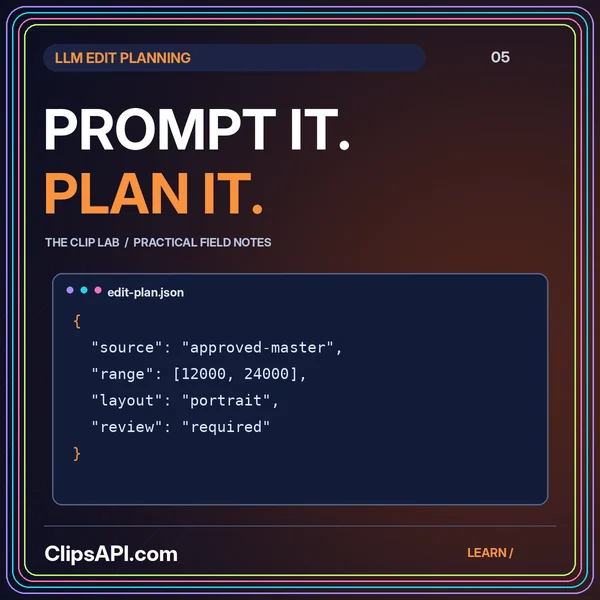
A natural-language editor can propose an interval, layout, and caption draft without receiving direct authority to publish. The useful bridge is a structured edit plan that another component can validate and a human can inspect. Examples here are conceptual planning objects, not executable ClipsAPI.com requests.
JSON Schema documents how to specify object properties, required fields, and additional-property rules. A validator can reject a malformed plan, but a well-formed plan can still select the wrong passage. Treat structural checks and editorial review as complementary steps.
A transcript is material to analyze, not a trusted instruction channel. Keep workspace access, allowed operations, and publication permissions outside it. Generated text should resolve to validated parameters rather than unrestricted commands or arbitrary source locations.
A revised crop, source interval, caption, or public description can change what was approved. Keep the prior plan, show the difference, and obtain the necessary review for the new version. Make errors specific enough that the editor knows what to repair.
No. Valid structure does not prove source authorization, timing accuracy, preserved meaning, or a good creative choice.
Give natural-language edits a clear structure, validation rules, evidence, and deliberate approval boundaries.
Build a clear clipping contract with source versions, precise timing, recoverable jobs, and reviewed outputs.